Click Your Way to Your Best Headshot!

Common Headshot Mistakes That Cost You Auditions

by Casting Intern
February 8, 2026 8:30AM UTC

Let me save you money and heartbreak: here are the mistakes I see every single day.

These aren't opinions. These are observable patterns from looking at thousands of submissions every month. Each one of these mistakes is an instant pass—your headshot goes in the reject pile before I even get to your resume.

The good news? These are all fixable. Avoid these seven mistakes and you're already ahead of most submissions I see.

Mistake #1: The Outdated Photo

This is the most common mistake, and it kills more auditions than anything else on this list.

Your headshot shows you with long hair. You walk in with short hair. Your headshot shows you thirty pounds lighter. You walk in at your current weight. Your headshot is from three years ago when you looked noticeably younger.

I hear the excuses: 'But it's only two years old.' 'I'm planning to grow my hair back.' 'I'm going to lose that weight before the shoot date.'

None of that matters. Your headshot needs to match how you look right now. Not how you used to look. Not how you plan to look. Now.

Here's what happens when you show up not matching your headshot: Even if you're perfect for the role, I've already wasted time on your submission. I've already formed an impression based on the photo. You've created confusion and doubt. That's not how you want to walk into an audition.

Update your headshots every one to two years minimum. Immediately if there's any major change to your hair, weight, or age appearance.

Mistake #2: The Glamour Shot

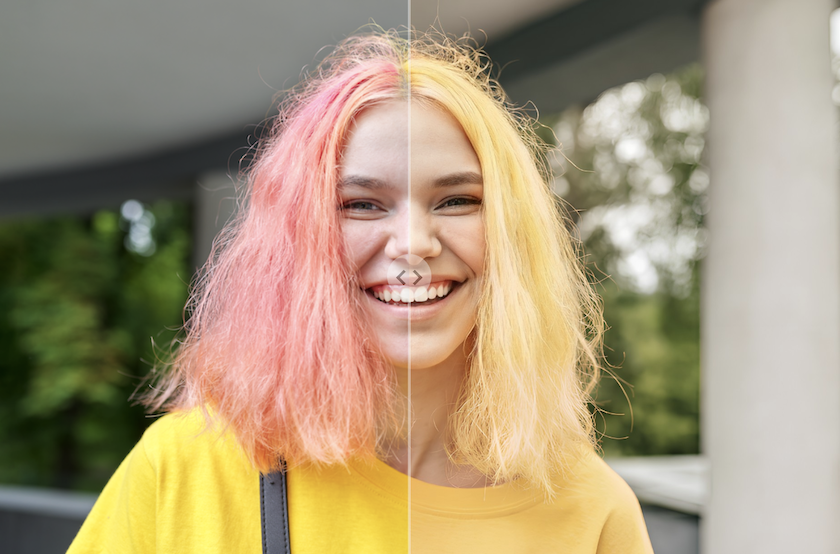
Heavy retouching. Smoothed skin. Softened everything. High-fashion lighting. You look like you're selling perfume, not auditioning for 'Detective #2' or 'Office Manager.'

The glamour shot makes you look like a different person under normal lighting conditions. When you walk into the audition room looking noticeably different from your headshot—rougher skin texture, visible pores, actual human features—it creates the same problem as the outdated photo. I can't trust what you really look like.

Light retouching is fine. Removing a temporary blemish, smoothing flyaway hairs, minor color correction—all standard. But when you're smoothing away your actual skin texture and facial character, you've crossed the line into unusable.

I need to see what you actually look like. That's the entire point of the headshot.

Mistake #3: Multiple Personalities in One Shot

You're trying to be commercial AND dramatic AND character all in one expression. Your eyes say serious actor, your mouth says friendly neighbor, your energy says quirky character type.

The result? No clear type is visible. You're asking me to categorize you, to figure out where you fit. I won't do that work.

I have five hundred other submissions. Someone in that pile is handing me exactly what I need: one clear, castable type. That person gets the callback.

Pick your strongest castable type and commit to it in your headshot. If you genuinely have two distinct types (commercial and theatrical, for example), you can have two headshots. But each one needs to clearly show ONE type.

Mistake #4: Poor Technical Quality

Soft focus, especially on the eyes. This is headshot photography 101—if the eyes aren't tack sharp, the photo fails.

Color balance problems. Orange-tinted skin from improper white balance. Gray, lifeless skin from poor color correction. Weird color casts that make you look sick or artificial.

Wrong resolution or file size. Your photo shows up blurry in our casting software because you submitted a low-res file, or it's so huge it takes forever to load.

These technical problems signal one thing: amateur approach. If you can't get the basics right in your headshot, why would I trust you to show up prepared and professional on set?

Professional photographers know these standards. If your photographer delivered files with these problems, find a new photographer.

Mistake #5: Wrong Crop and Framing

Too tight. Your face fills the entire frame and I feel claustrophobic looking at it. I can't see your shoulders, can't see your neckline, can't get a sense of your full presence.

Too loose. So much empty space around you that I have to squint to see your facial features clearly. Your face should be the focus, not the background.

Off-center composition. Your head is tilted at an odd angle, or positioned awkwardly in the frame. This rarely works and usually just looks like a mistake.

Distracting backgrounds. I can still see identifiable background elements that pull focus from your face. Headshot backgrounds should be simple and clean—either seamless or extremely soft focus.

Standard headshot crop: from mid-chest up, centered, with your face taking up most of the frame. There's a reason this is standard—it works.

Mistake #6: The 'Character' Shot

You're wearing a piece of costume. A hat. A specific period collar. A uniform element. You're giving me a specific character expression instead of showing me YOU.

Unless I specifically requested a character shot (which happens sometimes), this signals that you don't understand what headshots are for.

I need to see your neutral, castable self. The version of you that I can imagine in fifty different roles. When you show me one specific character, you're limiting how I can see you. That works against you.

Exception: If you're submitting for a very specific type that requires a costume element (period drama, western, etc.) and the breakdown specifically requests it. But that's rare.

Mistake #7: Mismatched to Role Type

The role breakdown says 'Corporate Executive, 40s, authoritative.' You submit a headshot with casual, friendly, approachable energy.

The breakdown says 'Struggling Artist, 20s-30s, bohemian.' You submit a headshot in business attire with polished, professional energy.

This tells me you didn't read the breakdown carefully. Or you read it and submitted anyway, hoping we'd see past the obvious mismatch. We won't.

Read the breakdown. If your headshot doesn't clearly show the type they're looking for, don't submit. You're wasting your time and ours.

Self-awareness is a professional skill. Knowing what types you can credibly play and only submitting for those roles makes you a better casting partner.

How to Avoid All of This

Work with a photographer who understands casting, not just photography. Ask them about their experience shooting actor headshots specifically. Look at their portfolio—do their subjects have clear, distinct types? Or do they all look the same?

Update your headshots every one to two years minimum. Immediately after any major appearance change.

Be clear on your primary castable type before the shoot. Choose clothing and expression that matches that type.

Check the technical quality on multiple devices. Does it look sharp on your phone? On a laptop? On a desktop monitor? All three?

Read role breakdowns carefully and only submit when you actually match the type they're looking for.

That's it. These aren't complicated fixes. But avoiding these seven mistakes puts you ahead of the majority of submissions I see.

Find a Photographer Who Understands Casting

Work with professionals who know what casting directors actually need.

Browse Directory